
Something feels off at your business, yet you might be unsure what to do next. Here is how to know when it is time to bring in an outside corporate investigator.
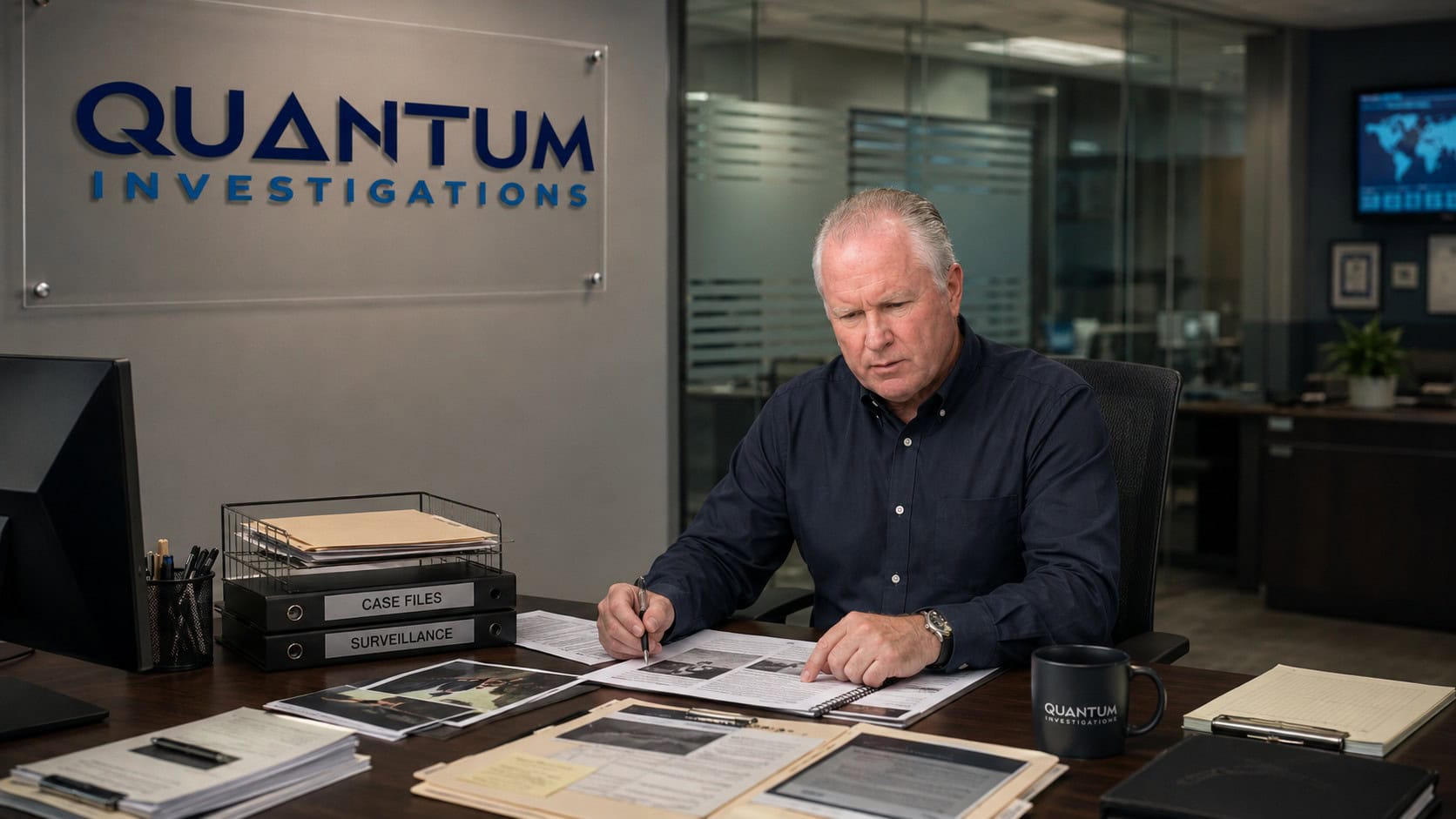
You do not have to catch someone in the act to know something is wrong. Maybe the numbers have been off for months. Maybe a key employee is acting differently. Maybe you are about to close a deal and something about the other party just does not sit right. Whatever the case may be, that feeling carries weight, and it usually means you are past the point where waiting is a smart strategy.
This guide is for Phoenix-area business owners, HR managers, and attorneys seeking a straight answer regarding when it makes sense to bring in an external corporate investigator and what to expect when you do.
A corporate investigator handles cases that fall outside what your HR team, accountant, or attorney can manage on their own. This includes suspected employee theft, internal fraud, vendor overbilling, contractor misrepresentation, insurance claim irregularities, and due diligence on business partners or executive-level hires. The work is investigative in the truest sense, involving gathering facts, documenting findings, and producing evidence that holds up in court, an HR proceeding, or an insurance claim. What separates a corporate investigator from a general private investigator is specialization. Business cases have specific legal and evidentiary standards, and evidence gathered incorrectly or by the wrong person can be challenged, thrown out, or used against you in a wrongful termination suit. The process matters as much as the outcome.
The instinct to handle matters internally is understandable. You trust your HR team, you want to avoid escalating something that might turn out to be nothing, and bringing in an outside investigator feels like a major step.
However, internal investigations carry real legal risks that most business owners fail to appreciate until it is too late. When HR investigates a suspected employee, they do so without the training, tools, or legal framework of a licensed investigator. The subject may be tipped off intentionally or accidentally, giving them time to delete files, cover their tracks, or build a retaliation narrative. Chain of custody regarding documents, communications, and physical evidence is rarely maintained to the standard required for court use.
If the investigation results in a termination that the employee challenges, any procedural misstep in the internal process becomes ammunition for their attorney. Bias also presents a problem because an internal investigation is never truly neutral. The investigator knows the people involved, has workplace relationships to protect, and may be influenced by how the outcome affects the team.
Courts and employment attorneys recognize this and utilize it. An external corporate investigator operates outside of those dynamics with no stake in internal politics, no prior relationship with the subject, and no reason to soften findings. The goal is to document what is happening in a legally defensible manner from the first day to the final report.
In Phoenix and across Maricopa County, businesses often lose winnable cases and face costly wrongful termination claims simply because they tried to manage a serious situation with internal resources unequipped for the task. The investigation itself was not the problem; the method was.
Most business owners who eventually hire a corporate investigator share a common realization: they knew something was wrong long before taking action. Hesitation is normal given the risks of accusing the wrong person or disrupting a functioning team.
Nonetheless, data on occupational fraud remains sobering, showing that the average scheme runs for 12 months before detection with a median loss of $145,000 per incident. Every month you wait allows the problem to compound. Clear warning signs include unexplained financial discrepancies, an employee living above their means, inventory shortages, and vendor relationships where paperwork looks correct but the actual work falls short. Other indicators involve key hires with vague references, or prospective business partners raising gut-level concerns.
None of these situations require absolute certainty before acting. You hire a corporate investigator precisely because certainty is lacking, and obtaining it legally without alerting the subject on your own is unrealistic.
Phoenix’s business environment amplifies these risks. Rapid metropolitan growth means companies hire at scale, onboard vendors quickly, and form business relationships faster than traditional vetting permits. Maricopa County’s construction and real estate sectors generate significant exposure to contractor fraud and vendor overbilling, where large dollar amounts accompany complicated paper trails.
Rapid growth creates opportunities for bad actors to operate undetected. The right time to call is when something feels wrong, rather than after losing additional funds trying to figure it out independently.
Want live answers?
Connect with a Quantum Investigations expert for fast, friendly support.
Not every licensed private investigator is equipped to handle a corporate case. Arizona requires all contract private investigators to hold a Department of Public Safety license, which verifies experience and background checks, but does not test for competence in specific case types. Licensing establishes the floor rather than the ceiling.
When hiring a corporate investigator, you evaluate their ability to gather evidence legally, document it properly, and produce findings that withstand scrutiny. Doing so requires specific experience beyond a simple license number. Inquiries regarding background, past case types, and chain-of-custody protocols provide valuable insight.
When a corporate investigation reaches a judge, HR panel, or insurance adjuster, evidence quality is paramount. How evidence was gathered and documented, alongside the investigator’s ability to testify credibly regarding methods, faces intense scrutiny. This makes an investigator’s background directly relevant rather than just a marketing credential.
Former law enforcement officers understand evidence standards from direct experience. They have worked cases where chain of custody faced challenges, documentation gaps derailed prosecutions, and the distinction between admissible and inadmissible evidence hinged on procedure. That institutional knowledge comes from years of handling high-stakes cases.
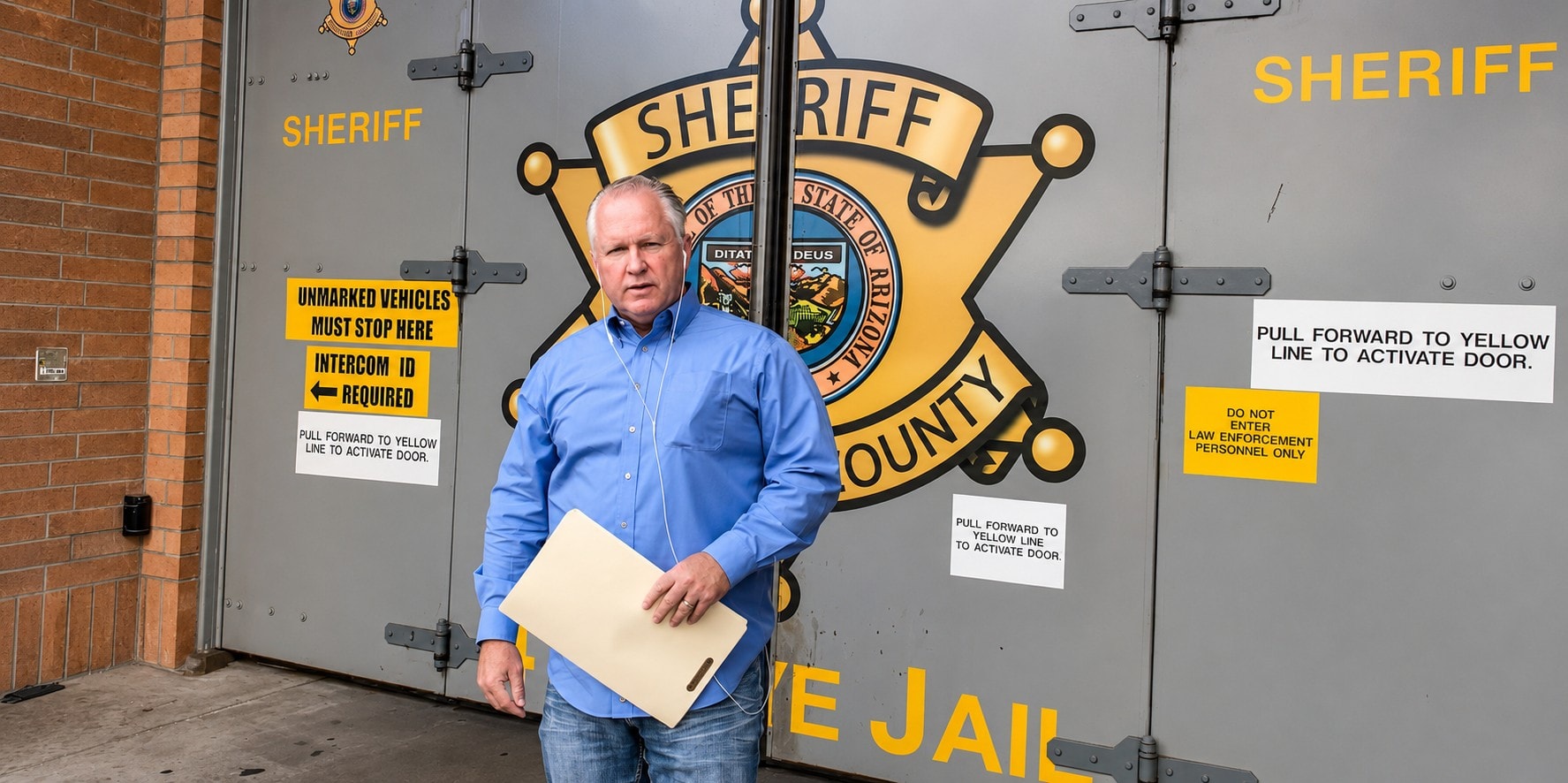
At Quantum Investigations, our team consists of former Phoenix Police Department officers and military personnel. Founder Jeff Penrod spent five years with the Phoenix PD before launching the firm, shaping how we approach every corporate case. We understand what Arizona courts and HR departments expect. We know how to conduct covert surveillance and field observation without alerting subjects or disrupting operations, embedding operational security into our workflow.
The Phoenix Police Department is among the largest municipal departments in the country. Working cases within it provides verifiable credentials in evidence protocols, local court standards, and complex investigations. Combined with military training emphasizing discipline, structured protocols, and precision, this background translates directly to corporate investigations.
For business owners and attorneys in the Phoenix area, this distinction matters. You need actionable findings rather than reports that fail under challenge.
A frequent concern among business owners is that bringing in an outside investigator will cause a scene, alerting employees and complicating the situation further. This valid concern deserves direct address.
A professional corporate investigation is designed to remain invisible to everyone except the client. Surveillance is conducted covertly, and field observations occur without the subject’s knowledge, avoiding any visible signals at your office. Discretion is built into every step to preserve the investigation’s integrity. The process typically begins with a consultation where you describe the situation, we ask clarifying questions, and we determine the appropriate investigative approach. Employee theft, vendor fraud, and acquisition due diligence each require different methods tailored to the problem.
The final deliverable includes organized documentation such as surveillance footage, written reports, photographic evidence, and findings formatted for review by your attorney, HR team, or insurance company. The objective extends beyond uncovering the truth to providing actionable results.
Having conducted corporate investigations across Phoenix and Maricopa County for over 23 years, we have assisted individual business owners, corporations, law firms, and insurance companies. Every case shares a common thread: clients requiring secure, legally gathered facts they could not obtain independently.
If something at your business does not add up, waiting for more evidence to appear on its own is counterproductive. Fraud schemes and misconduct rarely resolve through internal channels, and prolonged undetected problems increase financial and organizational damage.
Deciding to bring in an external corporate investigator represents a practical choice to secure accurate information through a legally sound, professionally executed process. For Phoenix-area businesses, this means partnering with professionals familiar with local courts, the local business environment, and regional operating pressures.
If you are ready to discuss your situation, Quantum Investigations offers a free consultation providing a direct, pressure-free conversation about your circumstances and how we can help. Reach out when you are ready.
Summary:
Article details:
Share: