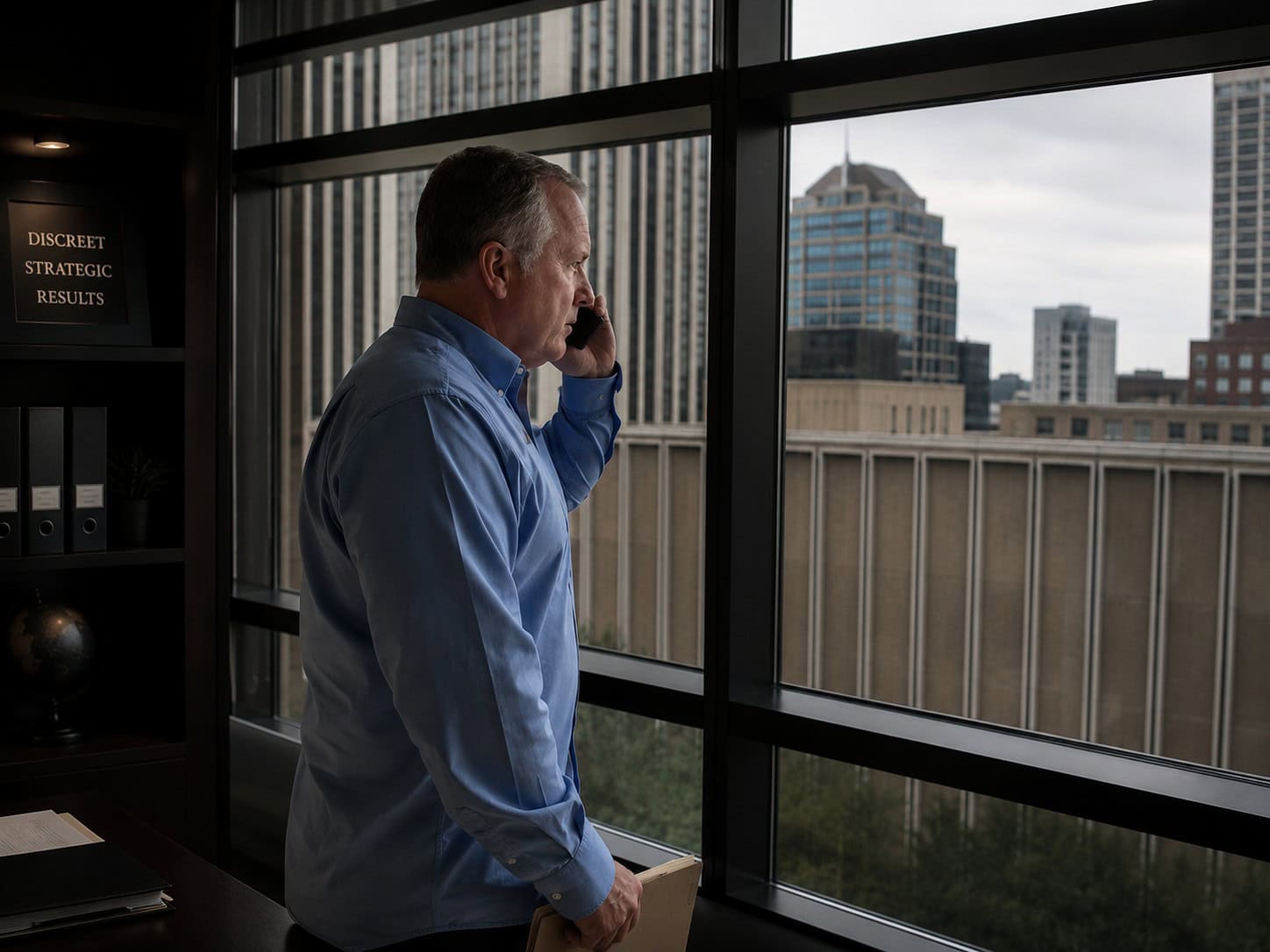
Before you hire anyone, make sure you are asking the right questions. Here is what separates a real private detective from a risky gamble.

You are not searching for a private detective because things are going well. Something is off, such as a suspicion, a missing person, or a legal situation that needs facts rather than guesses. Now you are staring at a list of names, trying to figure out who is qualified and who is going to take your money and disappear.
That is a hard position to be in. The stakes are real, the timeline feels urgent, and most of the websites you are reading say roughly the same thing. This page is different. We are going to give you three direct questions that cut through the noise so you can walk into any consultation knowing what to ask.
This sounds obvious, but it is the question most people skip. In Arizona, any private investigator conducting investigations on a contract basis is legally required to hold a license issued by the Arizona Department of Public Safety. That is not optional, as it is state law. An unlicensed investigator is not just cutting corners; they are operating illegally, and any evidence they gather could be worthless in court or create legal exposure for you.
Here is the part most people do not know: Arizona does not require a written exam to become a licensed private investigator. That means a license alone does not guarantee competency. It confirms minimum legal compliance, and nothing more. So when you ask about licensing, do not stop at a simple yes. Ask to see the license number and verify it yourself through the Arizona DPS PSP Portal before you commit to anything.

The Arizona Department of Public Safety maintains a publicly searchable portal where anyone can confirm a private investigator’s license status. The DPS Licensing Unit is located at 2102 W. Encanto Blvd in Phoenix, AZ, and the verification process is something any consumer can do on their own, for free, before ever picking up the phone.
To hold an agency license in Arizona, the qualifying party must have a minimum of three years, or 6,000 hours of part-time to full-time investigative experience. That is a meaningful bar. It means the person running the agency has done real investigative work, rather than just filed paperwork.
What you are looking for, beyond the license, is the background behind it. A former law enforcement officer who spent years working cases on the streets of Phoenix brings a perspective a license number cannot fully capture. This includes an understanding of how evidence is gathered legally, what holds up in court, and how investigations operate in the field. That kind of background is verifiable, so look for it.
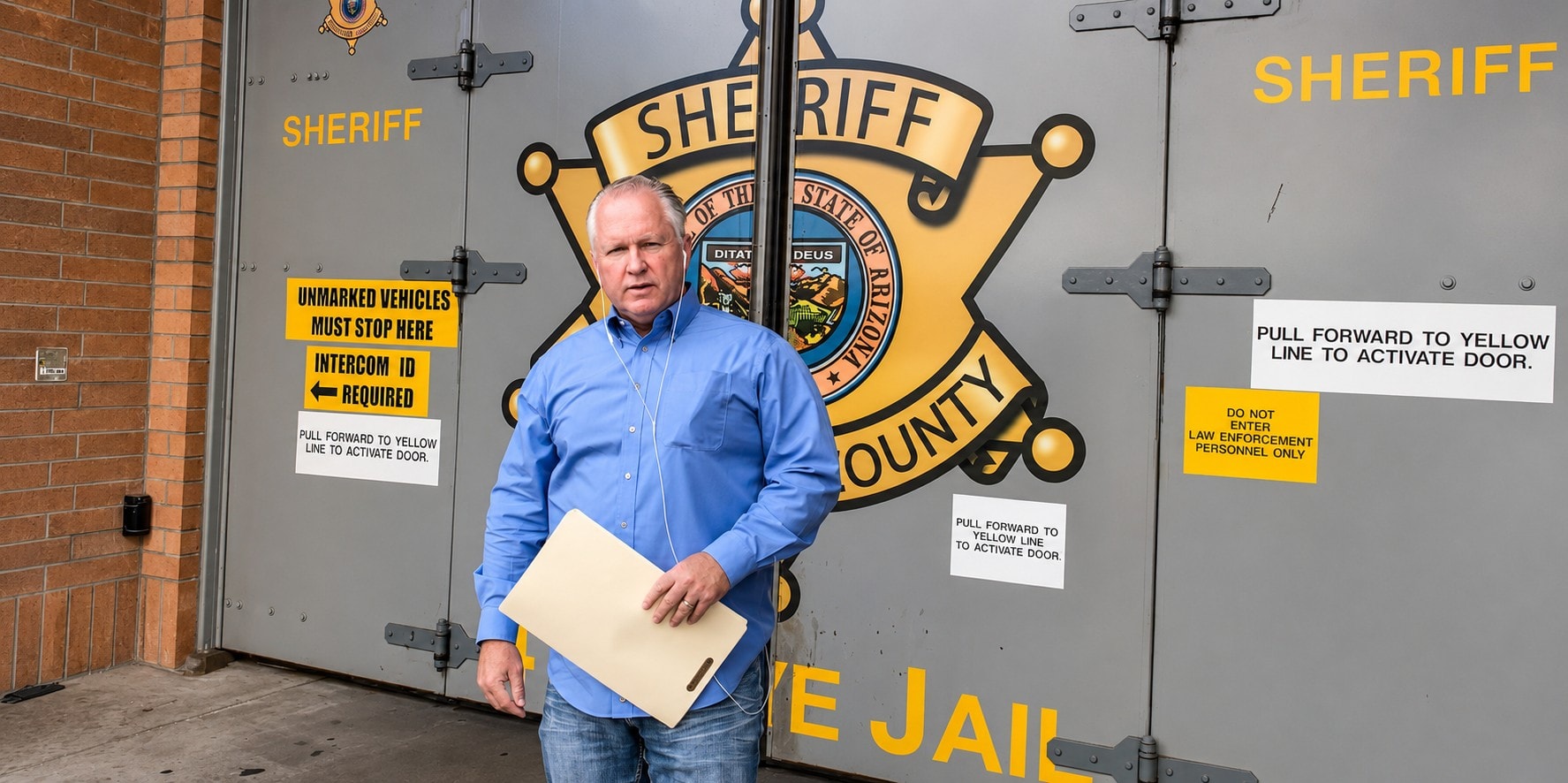
At Quantum Investigators, our lead investigator Jeff Penrod spent approximately five years as a Phoenix Police Department officer before founding this firm. His investigative career began during military service. Both of those backgrounds are documented, searchable, and directly relevant to the work we do. We are not asking you to take our word for it, because we are telling you where to look.
The point is not to promote ourselves here. The point is that these details should be verifiable for any investigator you are considering. If they cannot give you specifics, such as a license number, a background you can look up, or a track record that exists outside their own website, that is worth paying attention to.
A license tells you someone met Arizona’s minimum legal requirements. A background tells you if they are equipped to handle your case. These are two different things, and conflating them is one of the most common mistakes people make when hiring a private detective for the first time.
Law enforcement experience matters for a specific reason: investigators who have worked within the legal system understand what evidence is admissible and what is not. They know the difference between information that helps you and information that could backfire in a courtroom or custody hearing. That is not a minor distinction, as it is the difference between a case that moves forward and one that falls apart.
Military background adds a different layer. Discipline, operational planning, discretion, and the ability to work under pressure in unpredictable situations are applicable to surveillance work, missing persons investigations, and any case where the margin for error is small.
When you are sitting across from a private investigator in Phoenix, AZ, or on the phone with one for the first time, ask them directly about where they worked before this, what cases they have handled that are similar to yours, and how long they have been doing this work. The answers should be specific. Vague responses about years of experience without any detail are a warning sign rather than a reassurance.
Want live answers?
Connect with a Quantum Investigations expert for fast, friendly support.
There is a version of private investigation that involves sitting at a desk, running database searches, and packaging the results as an investigation. It is faster, cheaper to deliver, and far less useful than the real thing. The problem is that from the outside, it can look identical to legitimate field work until the results come back and there is nothing actionable in them.
Ask this question directly: Will someone physically work this case, or is this primarily a database search? A legitimate investigator will tell you what the process looks like. If the answer is vague, or if they pivot immediately to talking about their technology, that is worth noting.

Maricopa County covers over 9,000 square miles. The metro area stretches from Surprise and Peoria in the west to Chandler and Gilbert in the east, with Phoenix at the center and dozens of distinct communities in between. Effective field investigation here requires knowledge of the geography, including the neighborhoods, traffic patterns, and local rhythms, rather than just an address plugged into a mapping app.
Outdoor surveillance in Phoenix, AZ in July is a different operational reality than surveillance in October. Temperatures regularly exceed 110 degrees Fahrenheit during summer months, which affects how long an investigator can work in the field, what equipment holds up, and how subjects behave outdoors. An investigator who has never worked the Valley in summer lacks vital context.
Real field investigation means getting eyes on the situation. It means following leads through interviews, physical observation, and verified contact research, rather than just pulling public records and calling it done. When a missing persons case requires tracking someone through bank statement activity, field interviews with known contacts, and physical location verification, that is a different level of work than a database lookup.
We have operated in Maricopa County for over 23 years. Jeff Penrod is an Arizona native. Our offices in Phoenix and Mesa allow us to deploy quickly across the entire valley. When a case requires more than one investigator, we have the relationships to bring in additional help without losing continuity or quality. That is not something every agency in the Phoenix market can say, making it a fair question to ask any investigator you are considering.
This is one of the most important questions you can ask, and it is one most people do not think to raise until it is too late. Evidence gathered through illegal means, such as trespassing, illegal wiretapping, or unauthorized access to private records, is inadmissible in court and can expose you to legal liability. A licensed investigator with a law enforcement background understands this distinction in a way that someone without that experience does not.
What a licensed private investigator can do in Arizona is substantial: lawful surveillance from public spaces, public records research, skip tracing, interviews, field observation, and documented reporting that holds up when it matters. What they cannot do, and what a reputable investigator will tell you upfront, is access private financial records, phone records, or communications without legal authority. If an investigator implies they can get that kind of information without explaining how it is legally obtained, that is a serious red flag.
For individuals dealing with divorce proceedings in Arizona, this matters even more. Arizona is a community property state, meaning asset division in divorce cases is tied to what can be documented and proven. Evidence gathered improperly can be challenged or thrown out entirely, which is why the methodology behind an investigation is just as important as the outcome.
For attorneys, law firms, and businesses using private investigation services for due diligence, criminal defense support, or insurance fraud investigations, the legal admissibility question is non-negotiable. The investigator you hire needs to understand how their work product will be used and gather evidence accordingly. Ask them directly if they have worked with attorneys on cases like this before, how they document their findings, and what a final report looks like. The answers will tell you a great deal.
The first conversation matters more than most people realize. A legitimate investigator will ask questions about your situation before they ask about your budget. They will tell you honestly if your case is something they can help with, and they will not pressure you into signing anything on the first call.
A free, no-obligation consultation is not just a courtesy, as it serves as a signal. It means the investigator is confident in their work to have a real conversation before asking for a commitment. If the first call feels more like a sales pitch than a case assessment, trust that instinct.
The three questions we have covered, which include licensing and background, field methodology, and evidence integrity, give you a framework for evaluating any private detective in Phoenix, AZ or anywhere in Maricopa County. They will not make the situation you are in easier, but they will help you make a better decision under pressure. If you want to have that first conversation with a team that has been working cases in the Phoenix area for over two decades, Quantum Investigators is a straightforward place to start.
Summary:
Article details:
Share: