

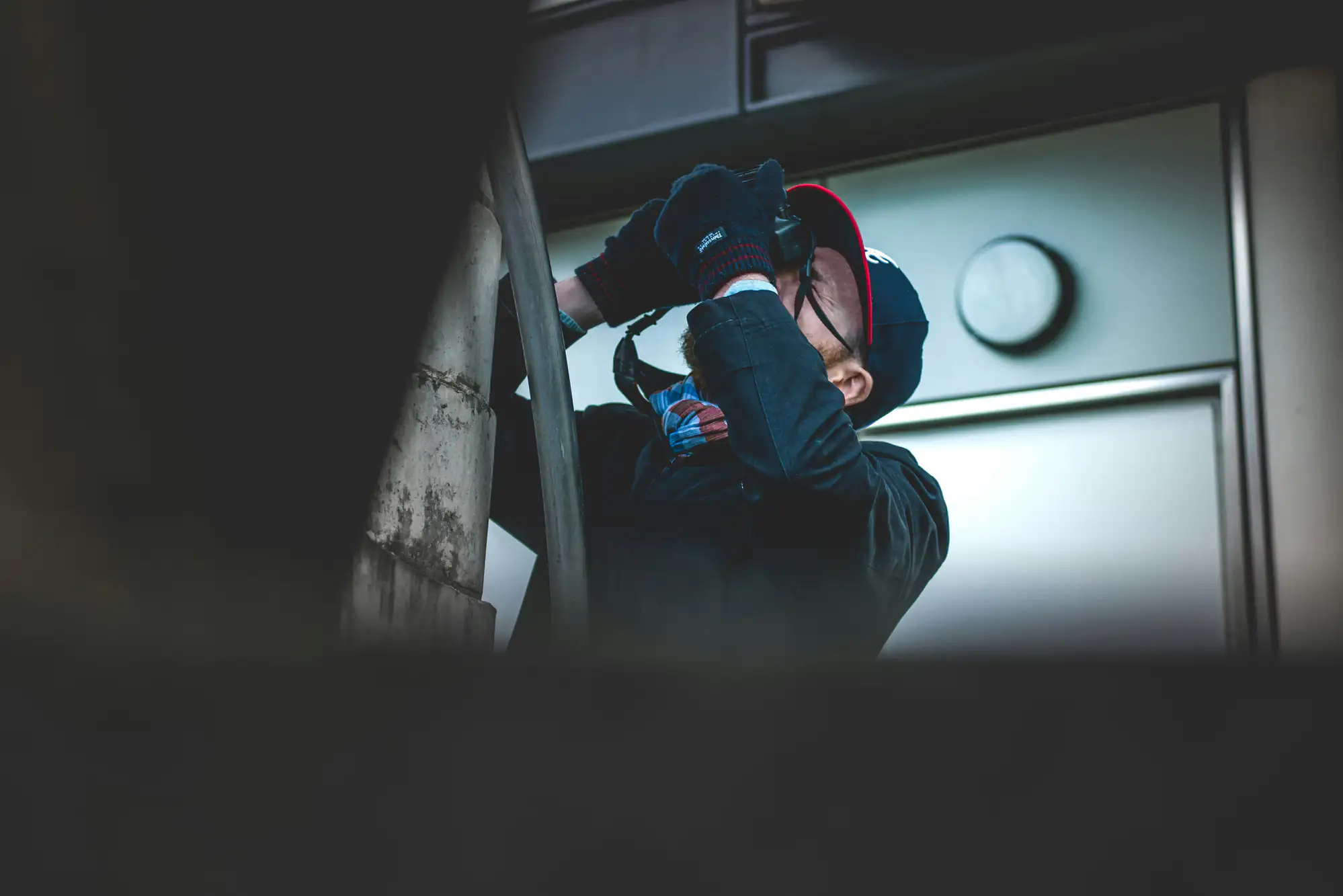
Most people who reach out to us aren’t looking for drama. They’re looking for clarity. They want to stop second-guessing themselves and start making decisions based on factsfacts that are documented, timestamped, and legally gathered.
In Anthem, where 65% of households are married couples and a third of homes have children under 18, the situations that lead people to us carry real weight. A contested custody schedule. A spouse whose story stopped adding up. A business partner you’re not sure you can trust. The outcome of getting it rightor wrongfollows you for years.
Documentation gathered the right way, by a licensed investigator who understands Arizona’s evidentiary standards, gives you something to stand on when it counts. We produce timestamped, GPS-tagged video evidence paired with written investigative reports formatted to meet Maricopa County court standards. That’s the difference between evidence that wins your case and footage that gets challenged or excluded.
There’s also a practical side that Anthem residents understand better than most. The community’s tight-knit characterHOA meetings, shared trails, familiar faces at Anthem Community Parkmeans that a botched surveillance attempt doesn’t just fail. It creates problems. Our investigators, trained through military and law enforcement backgrounds, are built to avoid exactly that outcome. You get the documentation you need without anyone in your neighborhood knowing you went looking for it.
Quantum Investigations has been operating in Arizona for more than 20 years, and our team brings something most competitors can’t replicateformer Phoenix Police Department experience. That background shapes everything about how we conduct investigations, from the methodology we use in the field to the way we document evidence for use in Arizona courts.
We serve Maricopa County and the surrounding corridor, including the full Anthem communityParkside, Country Club, and everything along the I-17 stretch connecting Anthem to north Phoenix. We hold AZ PI License #15479, issued by the Arizona Department of Public Safety, which is a public record you can verify directly.
Anthem’s dual law enforcement jurisdiction matters in how we work. West of I-17, Phoenix PD has authority. East of I-17, the Maricopa County Sheriff’s Office takes the lead. We know both jurisdictions and operate within the correct legal framework regardless of which side of the freeway your case takes us. That local knowledge is exactly the kind of detail that separates a professional investigation from a generic one.

It starts with a free, confidential consultation. You share what you’re dealing withthe situation, the timeline, what you need to knowand a licensed investigator helps you understand whether surveillance is the right approach, what it would involve, and what you can realistically expect. No commitment, no pressure. Just a straight conversation with someone who’s worked cases like yours before.
From there, the investigation is planned around your specific circumstances. In Anthem, that means accounting for the community’s layoutwhether the subject is in Parkside West under Phoenix PD jurisdiction or east of I-17 under the Maricopa County Sheriff’s Office, whether the location involves a gated area like Anthem Country Club where road access and HOA rules come into play, and what times of day or week are most relevant to your case.
Surveillance in a master-planned community with active common spaces and recognizable faces requires genuine operational discipline. Our investigators’ military and law enforcement backgrounds are directly relevant here. We know how to remain undetected in an environment where unfamiliar vehicles and faces stand out.
Once the investigation is complete, you receive a documented reporttimestamped video evidence, written activity logs, and materials formatted to meet Arizona court admissibility standards. If your case involves an attorney, that report is built to be useful in a legal proceeding, not just informative to you personally. The goal from day one is documentation that holds up, not just footage that looks convincing.

Ready to get started?
Surveillance investigation covers more ground than most people expect going in. The most common cases we handle in Anthem involve suspected infidelity, child custody disputes, and insurance fraudbut the service extends to asset searches connected to divorce proceedings, background checks on business partners, and corporate due diligence for the growing number of high-income technology professionals now living in the Anthem corridor near the TSMC semiconductor campus.
Every investigation we produce is designed to be used, not just reviewed. That means timestamped, GPS-tagged video evidence gathered in compliance with Arizona law, written investigative reports with detailed activity logs, and materials that meet the evidentiary standards of Maricopa County courts.
Arizona follows one-party consent rules for audio recording, and video surveillance in public spaces is generally legalbut the legal boundaries matter. We know exactly where they are. Evidence gathered the wrong way, by an unlicensed operator or an untrained individual, can be challenged or excluded entirely. That’s a risk Anthem clients with high-asset cases and active family law matters can’t afford to take.
We operate 24 hours a day, seven days a week. That availability matters specifically in Anthem, where surveillance subjects don’t keep office hours. If your situation calls for overnight or weekend documentation, we’re available to do itwithout waiting until Monday.

Yes, and the licensing requirements in Arizona are worth understanding before you hire anyone. Every private investigator operating for compensation in Arizona must hold a valid license issued by the Arizona Department of Public Safety. Operating without one is a Class 1 Misdemeanorthe most serious misdemeanor classification in the state. More importantly for you as a client, evidence gathered by an unlicensed investigator can be challenged in court and may be inadmissible entirely.
We hold AZ PI License #15479, which is a public record you can verify directly through the Arizona DPS. Beyond licensing, we operate within Arizona’s specific surveillance lawsincluding the rules governing video surveillance in public spaces and one-party consent for audio recording. In Anthem specifically, investigators also need to understand the community’s dual jurisdiction: west of I-17 falls under City of Phoenix authority, while east of I-17 falls under the Maricopa County Sheriff’s Office. That distinction affects how certain situations are handled legally, and it’s the kind of local detail that matters in a professional investigation.
Anthem Country Club is a gated community with privately owned roads, which adds a layer of access consideration that doesn’t apply in Anthem Parkside or other open areas of the community. We cannot trespass on private property to conduct surveillancethat applies everywhere in Arizona, not just gated communities. What that means operationally is that surveillance in and around the Country Club relies on legally accessible vantage points, mobile surveillance techniques, and the kind of professional tradecraft that makes it possible to document subject activity without entering restricted areas or drawing attention.
This is where our military and law enforcement backgrounds become directly relevant. Remaining undetected in a community where residents know each other and notice unfamiliar vehicles is a skill that comes from years of professional training, not a camera and a parking spot. The goal is always to gather what you need without alerting the subjectand in a tight-knit, affluent community like the Country Club, that requires genuine operational discipline. If you’re not sure whether your specific situation is workable, the free consultation is the right place to start that conversation.
Discretion is the foundation of professional covert surveillanceit’s not a feature, it’s the whole point. A subject who becomes aware of an investigation changes their behavior, becomes more careful, and may destroy evidence. Our investigators are trained specifically to avoid detection, using mobile surveillance techniques, varied positioning, and the kind of situational awareness developed through military and law enforcement careers.
In Anthem’s community environment, this matters more than it does in a large anonymous city. The community’s shared parks, trail systems, and HOA common areas mean that an unfamiliar face or vehicle can stand out. We account for thiswe don’t park in the same spot twice, we adapt to the environment, and we understand how to blend into a residential context without triggering suspicion. Client identity is also protected throughout the process. The subject of an investigation will not learn who hired us through any action on our partconfidentiality is a core operating principle, not a footnote.
Yes, if it’s gathered correctly. Surveillance evidence is regularly used in Arizona family law proceedingsincluding custody disputes heard in Maricopa County Superior Courtto document parental behavior, living conditions, custodial compliance, and other factors relevant to a judge’s determination. The critical variable is how the evidence is gathered and documented.
The evidence we produce is built for exactly this purpose. Timestamped, GPS-tagged video documentation paired with written investigative reports gives an attorney something concrete to work with. Maricopa County family law attorneys who work with professional investigators regularly know the difference between documentation that supports a case and raw footage that creates more questions than it answers. If you’re working with a family law attorney in Anthem or the surrounding area, our reports are formatted to meet the standards those attorneys need for court proceedings. And if you don’t yet have an attorney, the consultation is a good opportunity to understand what kind of documentation your situation may require before you engage one.
Surveillance investigation in Arizona is typically billed on an hourly basis. Most agencies also require a retainer upfront, commonly in the range of $500 to $2,000 depending on the scope and anticipated duration of the investigation. Expenses like mileage and database access are usually billed separately.
The honest answer is that most investigations require more than one session to produce meaningful documentation. A subject isn’t always doing what you need to document on the first day of surveillance. We can give you a realistic estimate of scope based on your specific situation during the consultationand that estimate matters, because going in with a clear picture of the likely investment helps you make a better decision. For Anthem residents dealing with high-asset divorce or contested custody cases, the cost of a professional investigation is typically a fraction of what inadequate or inadmissible evidence costs in a legal proceeding. The free consultation is the right place to get a realistic sense of what your case would involve.
The gap is bigger than most people expect, and it shows up in a few important ways. First, there’s the legal question. Arizona law governs what surveillance activities are permissible, where they can be conducted, and how recordings can be made. A private citizen who crosses those linesby entering private property, recording in a space with a reasonable expectation of privacy, or taking actions that could be characterized as stalking or harassmentcreates legal exposure for themselves. We know exactly where those boundaries are and operate within them.
Second, there’s the evidence question. Self-gathered surveillance footage is frequently challenged in court on the basis of how it was obtained, how it was preserved, and whether it meets Arizona’s admissibility standards. Even if the footage shows exactly what you hoped to document, a judge or opposing attorney can challenge its use if the chain of custody is unclear or the collection method is questionable. Third, attempting to follow or observe someone you know personally in a community as close-knit as Anthem carries a real risk of being recognizedby the subject, by a neighbor, or by someone who mentions it. That tips off the subject, makes professional investigation harder afterward, and potentially creates a confrontation. We avoid all three of these outcomes by design.
Here are some lawyer-related links: